

Project Case Study
Simplifying ultra luxury residential interiors projects with RDash
About MAIA Estates
MAIA Estates is a Bangalore-based real estate developer focused on crafting landmark residential and commercial spaces that blend intelligent design, high-quality execution, and long-term value. Founded in 2016 by Mayank Ruia, the company’s developments are guided by integrity, meticulous planning, and a commitment to delivering spaces that enrich lives and stand the test of time. MAIA’s work spans luxury residences, mixed-use projects, and bespoke environments built with transparency and precision at every stage of delivery.
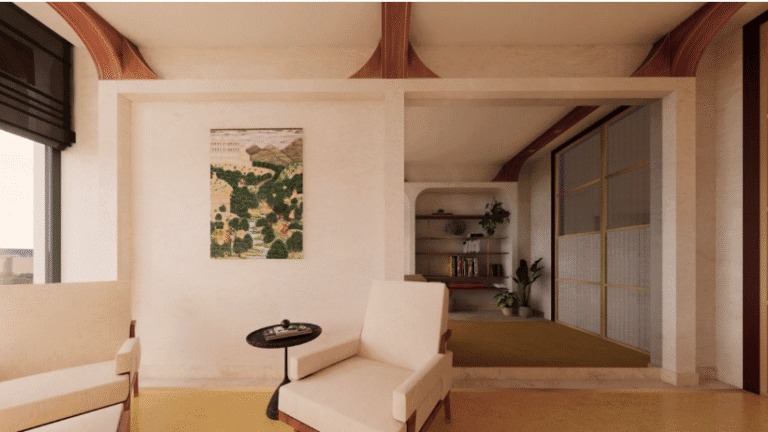
Project Name:
27 Summit
Location:
Bangalore
Project Category:
Ultra Luxury Residential Interiors
Belvedere Suites is a premium high-rise development involving complex structural execution and high-precision finishing works. With a total project value of ₹49.7 Cr and over 300 critical BOQ line items, the scope covered the entire construction lifecycle, from large-scale earthwork and concrete pours to detailed flooring and dado execution. The vertical scale and pace of execution demanded tight financial control, making real-time, BOQ-linked tracking essential to manage cash flow and cost accuracy across the project.
Complexity of the Project
Massive Stakeholder Coordination: Unlike typical home interiors managed by 2-3 people, this project required the synchronisation of 20+ specialised users. The challenge was to ensure that the Design Team (issuing 56+ files), the Procurement Team (issuing 50+ orders), and the Site Team (executing ~180 scheduled activities) were perfectly aligned without creating information silos.
High-Stakes Financial Control: With a BOQ value of ~₹5.5Cr distributed across ~450 line items, margin leakage was a critical risk. A minor quantification error in high-value categories like “Flooring & Cladding” (70+ items) or “Home Automation” could cost lakhs in unrecoverable expenses.
Intricate Quality & Handovers: Luxury lies in the details. The project demanded specific pre-installation checks (e.g., Light Marking Inspection, Pre-modular checklists) and a rigorous snagging process. Managing these ad-hoc quality benchmarks manually often leads to delays and client dissatisfaction during the handover phase.
How RDash Helped
For Residential projects, tight control over the project scope and finances is a game-changer for higher margins
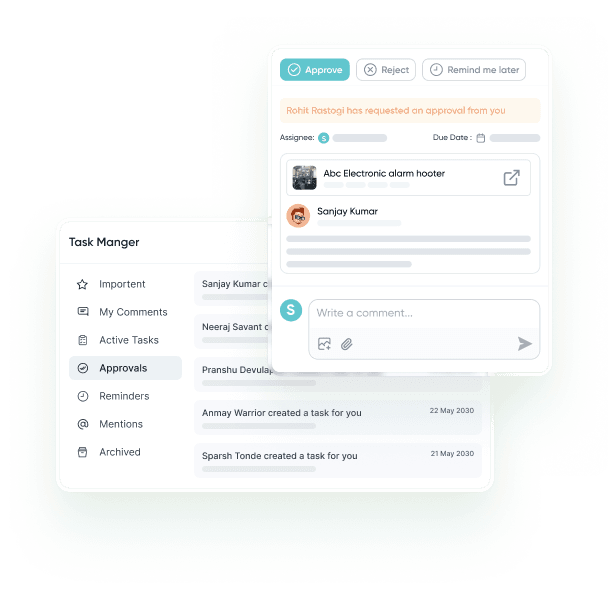
Financial Hygiene: The “Maker-Checker” Shield
For a ₹5.5Cr project, financial control is not optional; it is survival. The team utilised RDash to enforce a strict 3-Level Approval Hierarchy for all vendor orders.
- The Workflow: Instead of ad-hoc email approvals, every Purchase Order was punched digitally. The system tracked ₹4.73 Cr of Orders against the ₹5.14 Cr BOQ, giving management real-time visibility into committed costs vs. budget.
- The Impact: 50 distinct Vendor Orders were processed with zero unauthorized spending. The “Maker-Checker” rule ensured that no material was ordered without the explicit digital sign-off of the AGM/VP, preventing budget overruns before they happened.
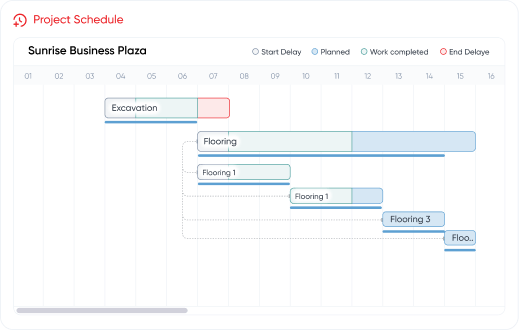
Mastering the “4 Levels of Progress”
RDash allowed the team to move beyond simple Gantt charts to track the project’s true financial health.
- Activity Tracking: The team mapped the full lifecycle—from Design GFCs and Shop Drawings to Material Delivery and Handover—across 165 distinct schedule activities.
- Installed Work (Revenue Realisation): Progress was tracked against the 436 BOQ line items (Civil, MEP, Finishes). This granular data allowed the team to raise ₹2.99 Cr in client payment requests backed by irrefutable proof of work.
- DPR Transparency: 90 Daily Progress Reports (DPRs) were generated and sent directly to the client and stakeholders. This eliminated the “black box” of construction, keeping the homeowner informed about manpower, material, and site blockers every single day.
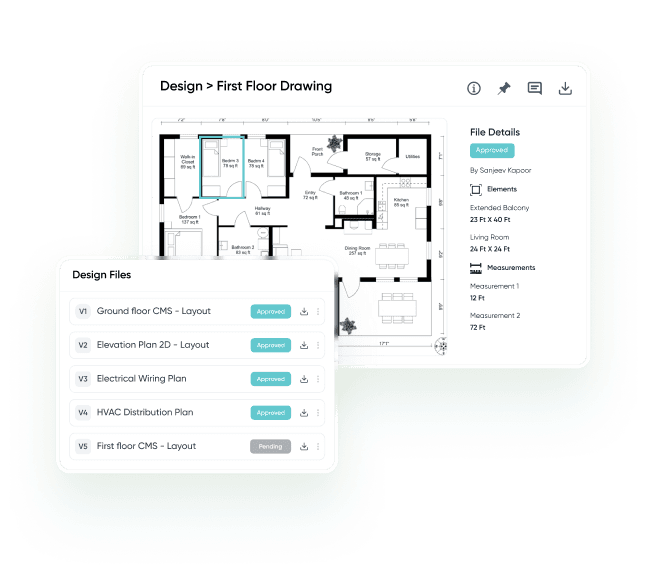
Zero-Error Design & Procurement
- Design Management: With 56 active design files (covering Sections, RCP, HVAC, and Joinery) and at least 3 major iteration cycles, Rdash ensured the site team always built from the latest “Good for Construction” (GFC) drawings, eliminating costly rework.
- Recce & Snags: The team digitized their site inspections, capturing specific checklists for “Light Marking” and “Modular Installation.” During handover, 5 critical snags (chipped tiles, uneven shutters) were logged, assigned, and closed on the app, ensuring the premium finish expected by the client.